But as a further safety precaution always carry out a safety stop at between 5-6 metres 16-20 feet. He later developed progressive skin mottling.
 Decompression Sickness Dcs Probability Isopleths Given That The Crew Download Scientific Diagram
Ascending at 1 foot per second you would have another stop at 30 for 23 minutes.
Decompression sickness at 30 feet. 12112017 Diver Develops DCS After Getting Lost. 2222016 The answer is 33 fsw feet of seawater. If you did that dive you would have major stops on the ascent.
The risk of decompression sickness increases with depth and length of dive. The deeper and longer your dive the more chance you need decompression stops. 11182018 The standard maximum ascent rate is 30 feet or 9 meters per minute.
By increasing the ratio of surface time to dive time to two eg. Symptoms of decompression sickness usually develop more slowly than do those of air embolism and pulmonary barotrauma. If you want to prove it merely take 641 lbs the weight of a cubic foot of seawater divide by the number of inches in a cubic foot.
There is no effervescence. 90 second dive 180 second surface interval equivalent depth would be about 30 feet when freediving to 100 feet and no risk of decompression sickness would occur. Look on your decompression table for 140 for 80 minutes.
There are no lingering bubbles. 11272019 To prevent decompression sickness most divers make a safety stop for a few minutes before ascending to the surface. The contents look exactly like water.
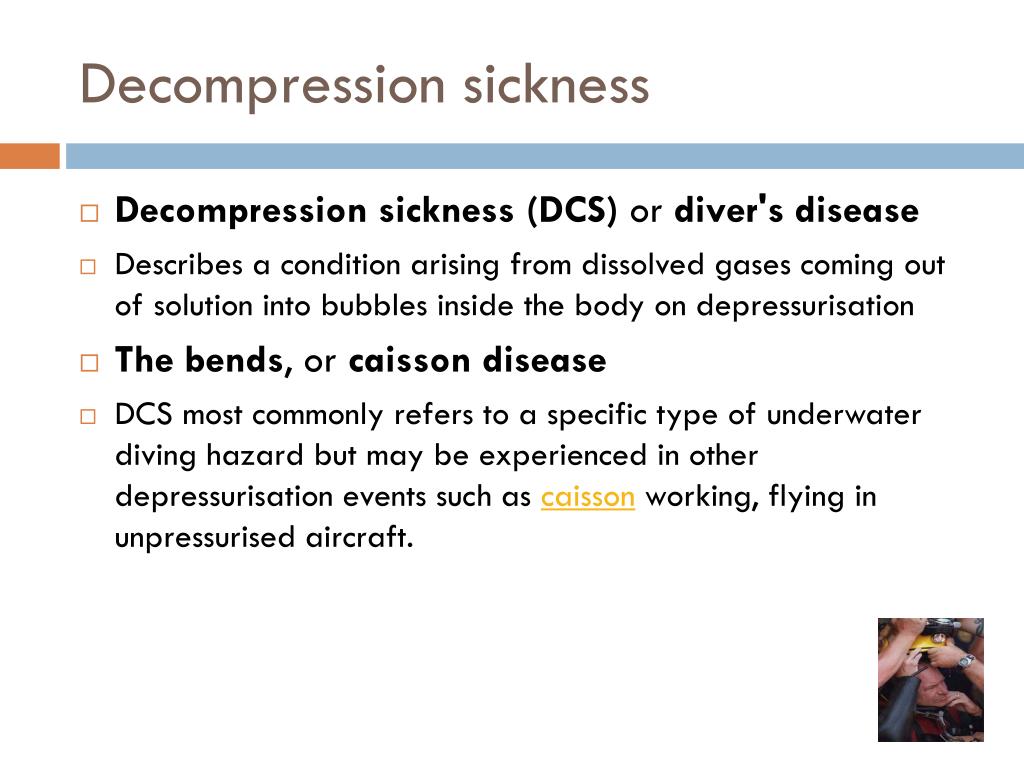
Decompression sickness DCS is an acute condition that occurs during or shortly after an acute reduction in ambient pressure caused by bubbles. Only half of the people with decompression sickness have symptoms within 1 hour of surfacing but 90 have symptoms by 6 hours. Divers should be cautious about approaching no-decompression limits especially when diving deeper than 100 feet 30 meters.
Avoiding the risk factors described above will decrease the risk of DCS. Understanding decompression sickness will safeguard. Flying or other exposure to altitude too soon after diving can also increase the risk of decompression sickness as explained in Flying After Diving.
If it is shaken the bubbles quickly go to the surface. What is decompression sickness. Make it a point to check your depth gauge and timer to make sure you are ascending at the proper speed.
Hold a bottle of unopened seltzer to the light. One diver a 58-year-old male dived with air while many others in the group used 33 Enriched Air Nitrox. His prehospital emergency medical services EMS assessment revealed transient hypotension and hypoxia.
It can be caused by an acute decompression from ground level to altitude or more commonly by decompression from a dive or hyperbaric chamber exposure back to ambient pressure. This is usually done around 15 feet 45 meters below the surface. Symptoms commonly begin gradually and take some time to reach their maximum effect.
A 46-year-old male presented to our tertiary care emergency department ED with shortness of breath and chest pain following an uneventful four-hour SCUBA dive at 100 feet. Serology was significant for acute kidney injury. After a 40-minute wreck dive to 78 feet 24 meters and one hour surface interval a group of divers made a second dive to 78 feet 24 meters for about 45 minutes.
90 second dive 180 second surface interval equivalent depth would be about 30 feet when freediving to 100 feet and no risk of decompression sickness would occur. 8232018 By increasing the ratio of surface time to dive time to two eg. Dives to over 30 metres 100 feet limit your dive time to around 20 minutes before a decompression stop is required.
You would have to stop at 40 and hang out there for 10 minutes. Shallow dives of 6-10 metres 20-30 feet you can spend over 200 minutes without a decompression stop. So when youre planning a deeper dive to more than 10 metres 30 feet please bear this in mind.
 How Fast Can You Ascend When Scuba Diving Scuba Diving Diving Scuba
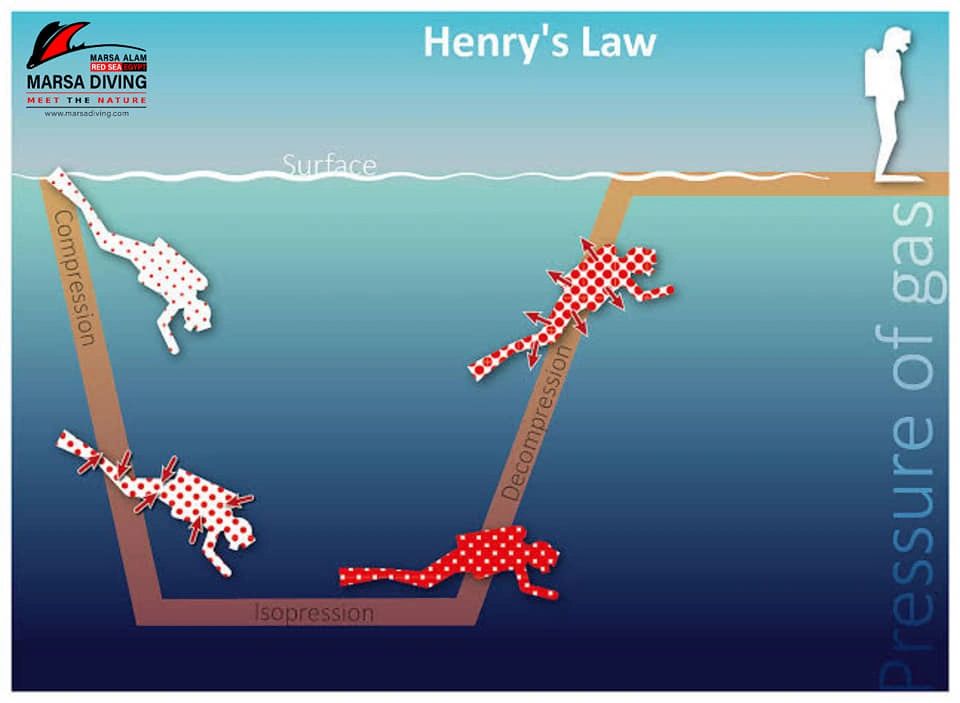
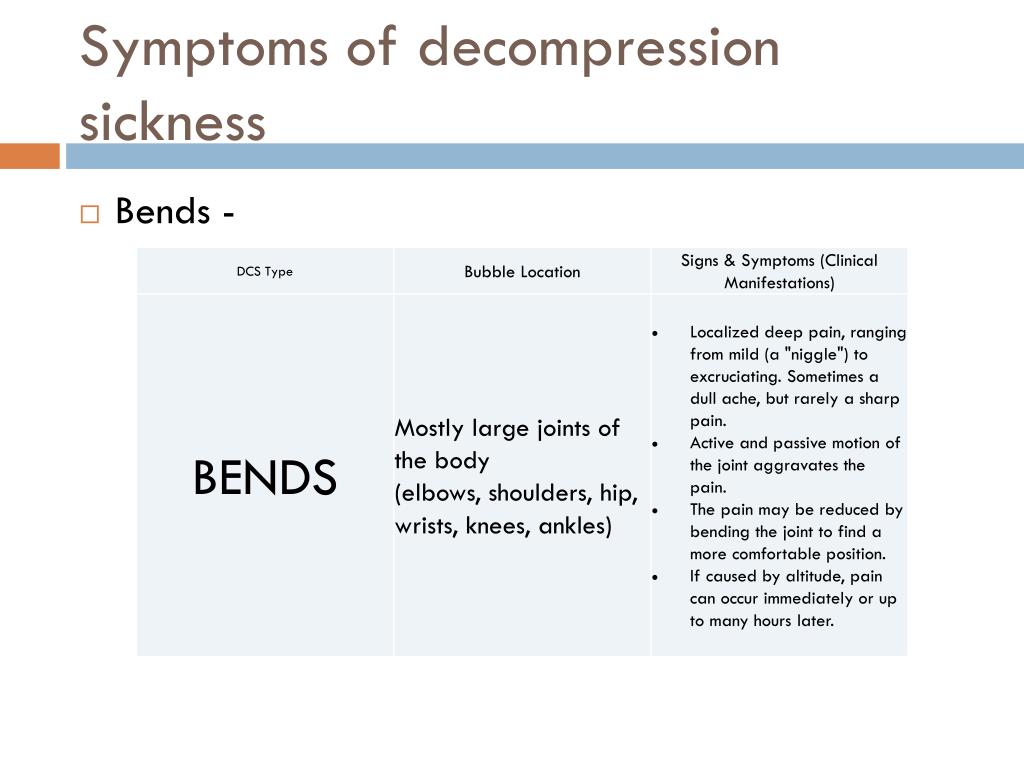 Ppt Decompression Sickness Powerpoint Presentation Free Download Id 1815000
 Jim And The Aquanauts Deep Sea Diving Suit Deep Sea Diving Suit Atmospheric Diving Suit Diving Suit
 Decompression Illness Emergency Nursing Body Disorders Medical Facts
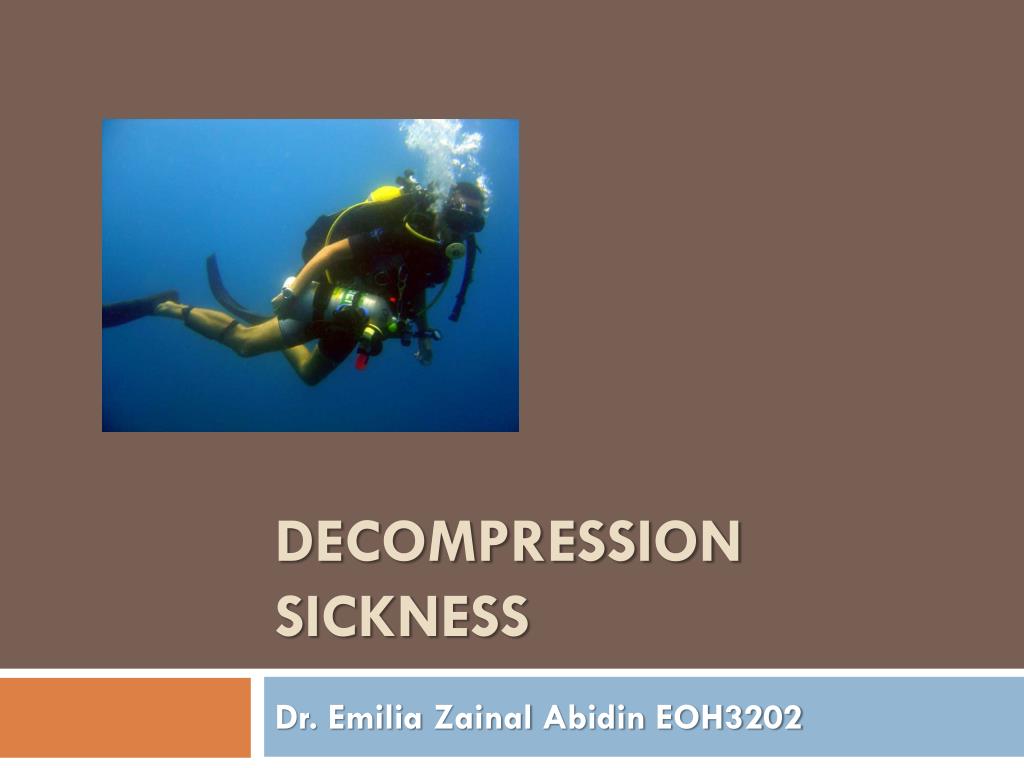 Ppt Decompression Sickness Powerpoint Presentation Free Download Id 1815000
 How Serious Is Decompression Sickness Diving Decompression Sickness Scuba Diving Certification
 The Weird Dangerous Isolated Life Of The Saturation Diver Diver Leagues Under The Sea Life
 Naui Dive Table Diving Lettering
 Ppt Decompression Sickness Powerpoint Presentation Free Download Id 1815000
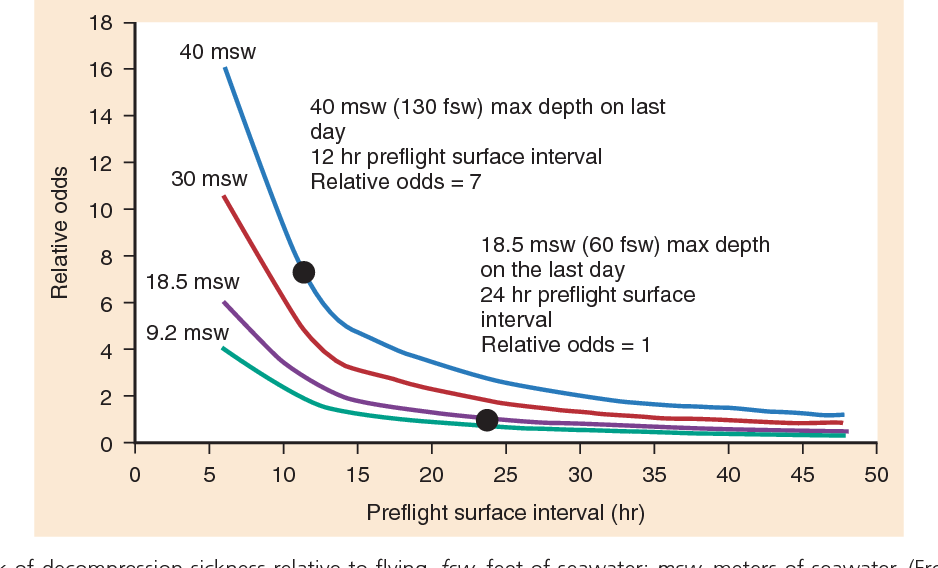 Figure 143 10 From 1915 Chapter 143 Scuba Diving And Dysbarism Semantic Scholar
 The Evolution Of The Atmospheric Diving Suit Diving Suit Atmospheric Diving Suit Historical Photos
Ppt Decompression Sickness Powerpoint Presentation Free Download Id 1815000
 Decompression Sickness Ppt Video Online Download
 The Evolution Of The Atmospheric Diving Suit Atmospheric Diving Suit Diving Suit Exosuit
 How To Learn Scuba Diving Copper Zia On Fuseink Scuba Diving Diving Gear Diving
 Police Number Meanings Hand Gestures For Divers Scuba Diving Diving Scuba
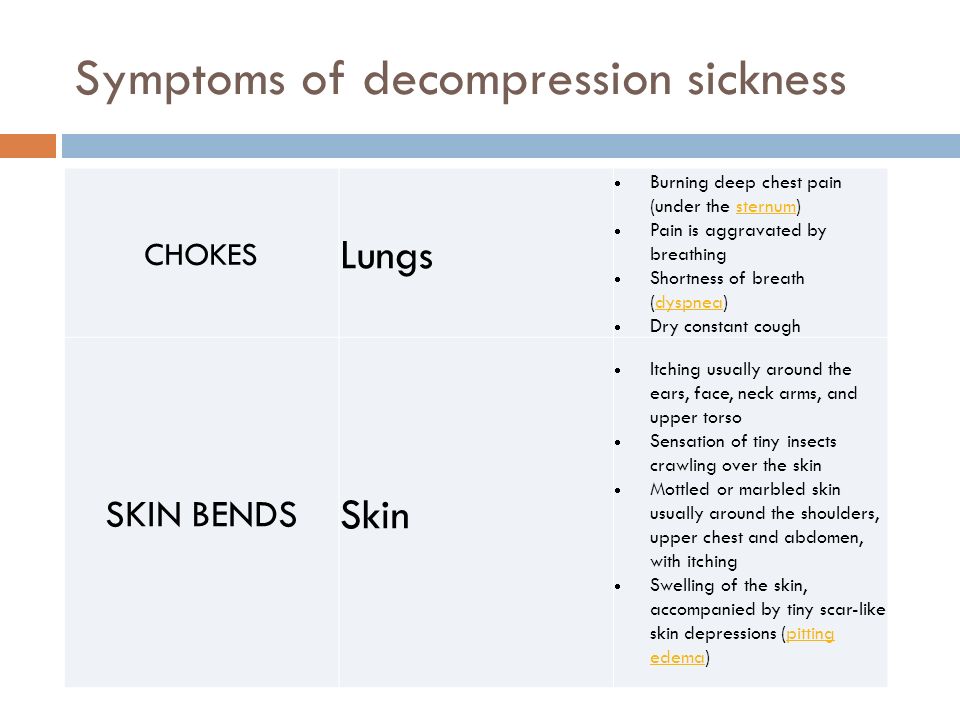 Decompression Sickness Ppt Video Online Download
 Padi Divemaster Course Saint Julian S Malta Click For Details Www Diveoclockpro Com Dive O Best Scuba Diving Scuba Diving Courses Scuba Travel
Post a Comment for "Decompression Sickness At 30 Feet"