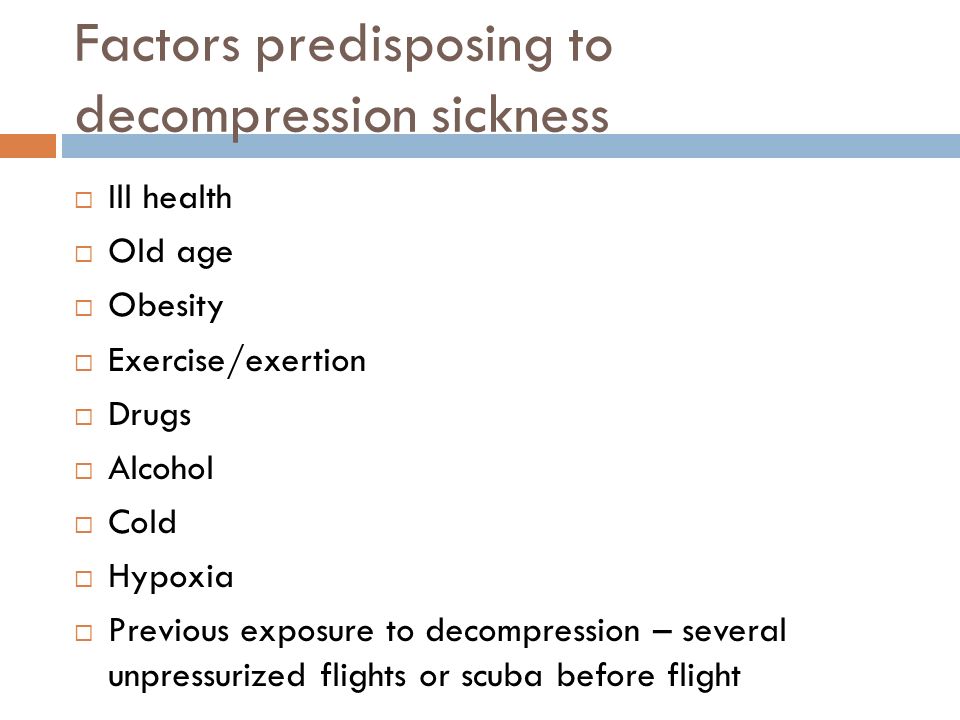
DCS may develop when a divers degree of supersaturation is so high or stated another way if the elimination gradient is so steep that a controlled transfer. Commercial planes pressurized at 5000 ft.
 Decompression Sickness
Decompression Sickness
Decompression sickness starts with the formation and increase in size of extravascular and intravascular bubbles when the sum of the dissolved gas tensions oxygen carbon dioxide nitrogen helium and water vapour exceeds the local absolute pressure.
Type 3 decompression sickness. 872019 Types of Decompression Sickness. Sub-Clinical Type 1 Pain Only Type 2 CardioPulmonary. Decompression Sicknessclassification Decompression Sicknesscomplications.
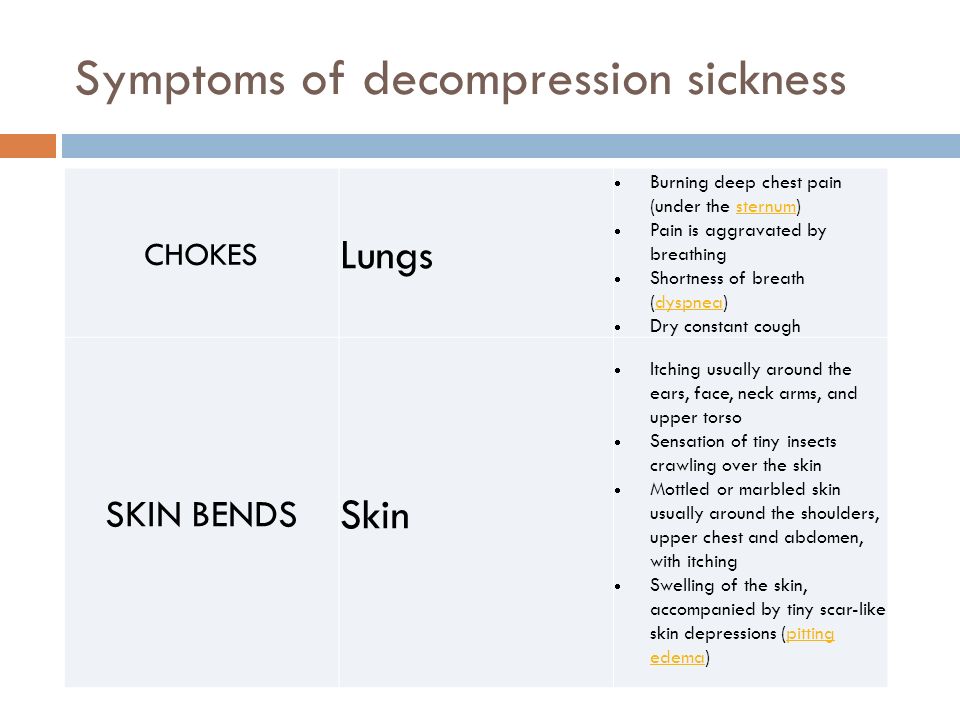
Symptoms of Decompression Sickness. It usually occurs in. If multiple dives unlimited suggest 24 48 hr.
Plane after diving. Butler WP Ainscough M Penne-Casanova R. 11272019 Decompression sickness is a type of injury that occurs when theres a rapid decrease in pressure surrounding the body.
Decompression Sickness DCS is a condition caused by the change in absorbed gas volume upon depressurization that releases gas bubbles into tissue and vasculature 1. 8232011 Decompression Sickness Type 3 This type of Sickness is the combination of age and decompression sickness with Neurological symptoms. DCI can now be thought of as having 3 categories.
Even in lower altitude. 12 hr after dive lt 2 hr in last 48 hr. 6302011 Decompression Sickness is classified as type 1 type 3 or type 3.
Type III decompression sickness. DECOMPRESSION SICKNESS Nitrogen reaches Equilibrium slowly in many tissues particularly Fatty tissues so it leaves the body slowly. While DCS is commonly thought of as a bubble disease bubbles are probably only the gateway to a complex array of consequences and effects.
9025812 PubMed - indexed for MEDLINE Publication Types. The more severe type of decompression sickness most commonly results in neurologic symptoms which range from mild numbness to paralysis and death. Divingadverse effects Embolism Airetiology Humans.
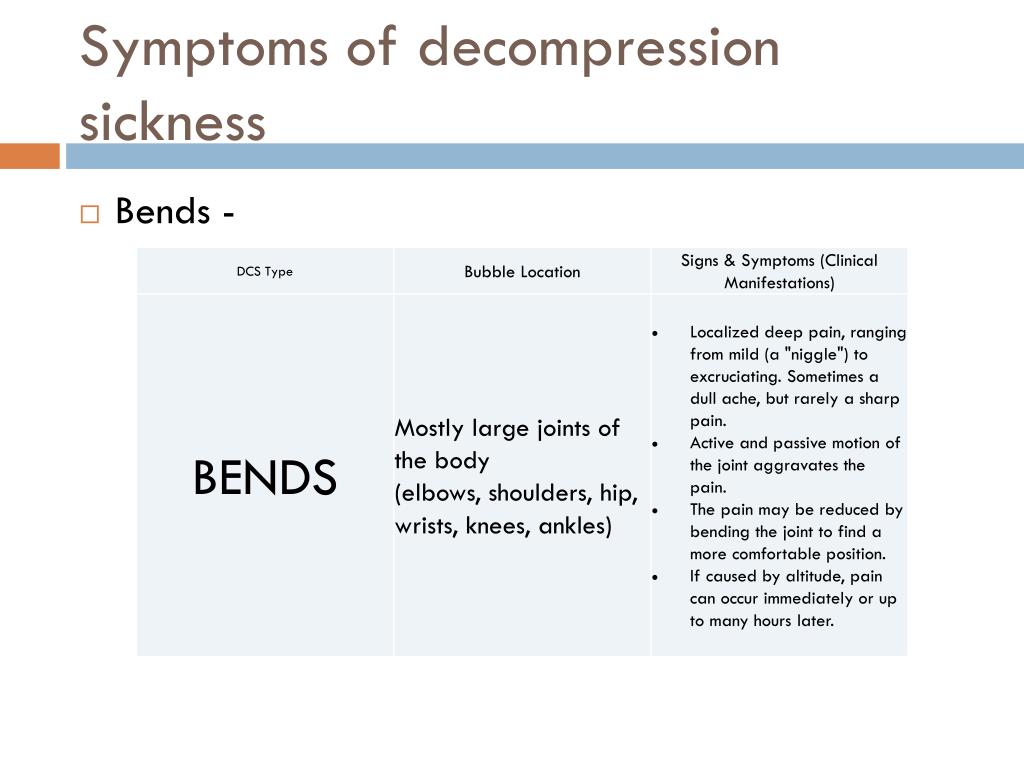
This takes the form of pain in the joints and in the body. 232019 DCS TYPE III Includes Arterial Gas Embolism Also called Decompression Illness DCI 13. The common symptoms of Decompression Sickness.
3152017 Decompression sickness DCS which is caused by inert gas bubbles in tissues is an injury of concern for scuba divers compressed air workers astronauts and aviators. People involved with tunneling projects in. The spinal cord is especially vulnerable.
372015 20-3 DECOMPRESSION SICKNESS While a history of diving or altitude exposure is necessary for the diagnosis of decompression sickness to be made the depth and duration of the dive are useful only in establishing if required decompression was missed. Hence Women with a greater average percentage body fat than men and Obese men face greater risk for DCS. Case reports for 3322 air and N2-O2 dives resulting in 190 DCS events were retrospectively analyzed and the outcomes were scored as 1 serious neurological 2 cardiopulmonary 3 mild neurological 4.
Is it safe to fly a Decompression Illness. All DCI should be treated as serious even though the actual symptoms may appear mild. Neurological Type 3 Vestibular Type 4 Osteopathic.
This is uncommon in sport divers unless dives have been long. Type 2 after 4 weeks. The most common presentation of DCS in shallow dives is referred to as DCSRead More.
Decompression Sickness Type 1 This is the least serious type of Decompression Sickness. Symptoms of spinal cord involvement can include numbness tingling weakness or a combination in the arms legs or both. Decompression Sickness is mostly seen in Knees Shoulders Ankles and in Joints.
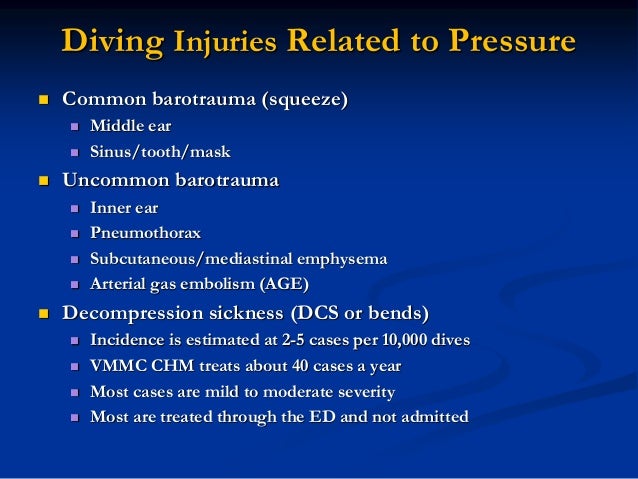
Decompression sickness can occur in divers well within no-decompression limits or in divers who have. It is a life threatening condition for an individual. Can be very painful or just niggly hence niggles.
352019 Although decompression sickness DCS a complex resulting from changed barometric pressure includes high-altituderelated and aerospace-related events this article focuses on decompression associated with the sudden decrease in pressures during underwater ascent usually occurring during free or assisted dives. Type II includes neurologic systems either CNS or peripheral cardiorespiratory audiovestibular. Type I Typically pain in a joint or joints.
This process can occur in divers who quickly arise from depth or who perform repetitive dives. 5312020 Type I involves musculoskeletal skin and lymphatic tissue and often has accompanying fatigue. Type 1 after 7 days.
Plane or diving after DCS.
 Decompression Illness
Decompression Illness
 Abb 1 8 Systematik Der Tauchunfalle Dci Decompression Illness Download Scientific Diagram
 Decompression Illness Overview Of Clinical Forms Pathophysiology Download Scientific Diagram
 Diving Medicine Decompression Sickness A Self Directed Learning Mod
Diving Medicine Decompression Sickness A Self Directed Learning Mod
 Decompression Illness Decompression Sickness Vs Arterial Grepmed
 3 Telltale Symptoms Of Dcs Diving Decompression Sickness Scuba Diving Certification
 Differential Diagnosis Of Decompression Illness Download Table
 Decompression Sickness Ppt Video Online Download
 Decompression Sickness Ppt Video Online Download
 Decompression Sickness Ppt Video Online Download
 7 Easy Ways To Identify Decompression Sickness Symptoms
 Pdf Evaluation And Management Of Decompression Illness An Intensivist S Perspective
 Decompression Illness
 Ppt Decompression Sickness Powerpoint Presentation Free Download Id 1815000
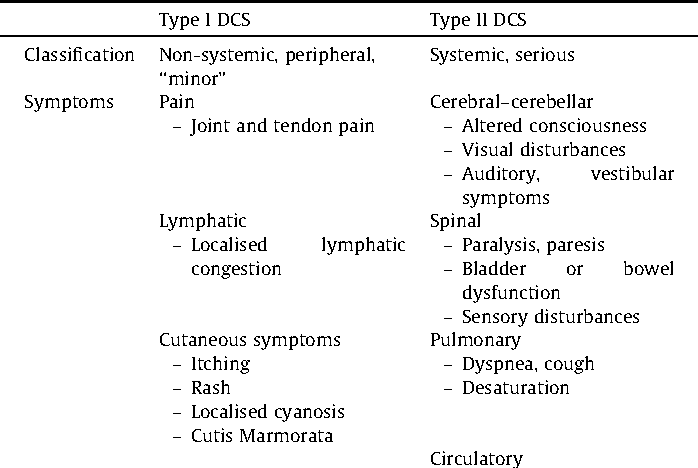 Table 1 From Cutis Marmorata Skin Decompression Sickness Is A Manifestation Of Brainstem Bubble Embolization Not Of Local Skin Bubbles Semantic Scholar

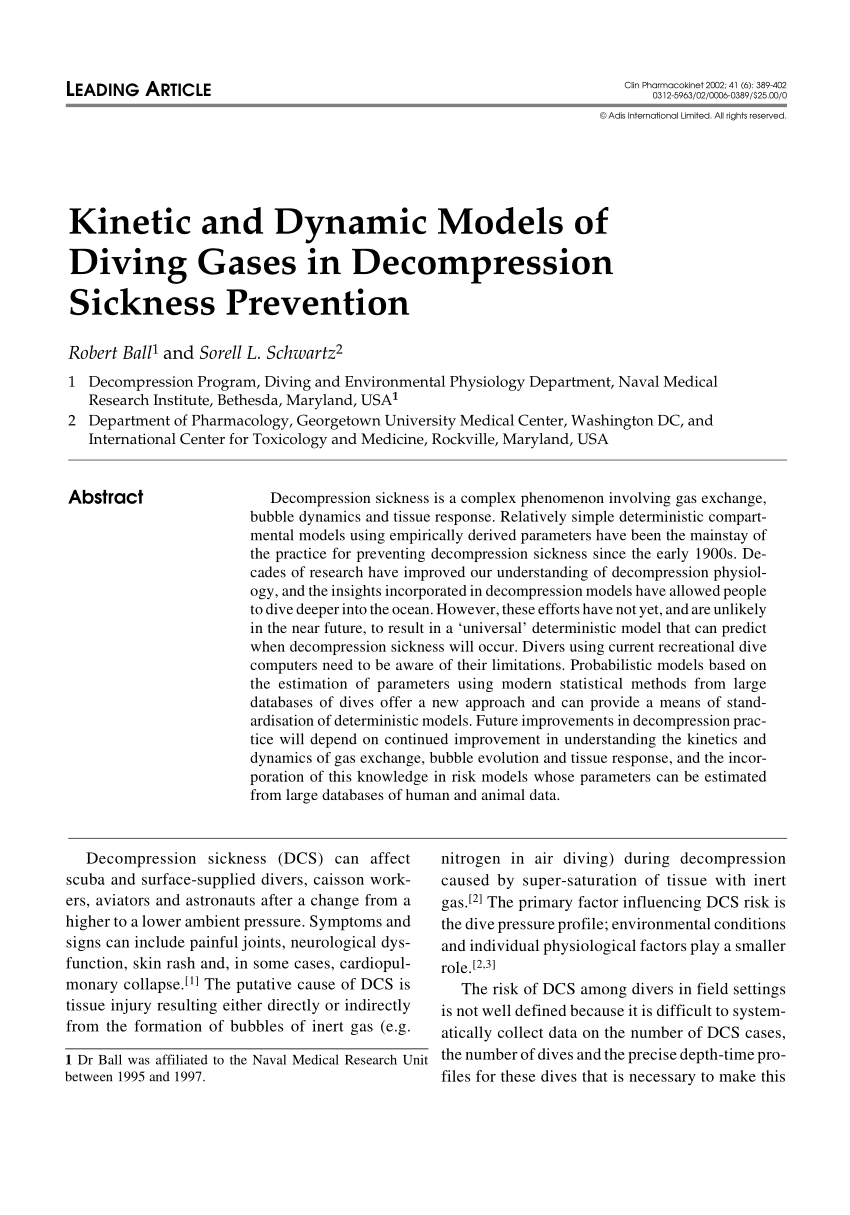 Pdf Kinetic And Dynamic Models Of Diving Gases In Decompression Sickness Prevention
 What Is Caisson Disease If A Driver Has Been Beneath The Sea For Long Enough That Large Amount Of Nitrogen Have Dis Body Fluid Air Embolism Beneath The Sea
Decompression Sickness Ppt Video Online Download
Post a Comment for "Type 3 Decompression Sickness"