Motion sickness patients and staff. VOLUME 5 Diving Medicine.
 Decompression Sickness Medical Articles Service Medicine Aqua Med
Recompression Chamber Operations 17 Diagnosis and Treatment of Decompression Sickness and Arterial Gas Embolism 18 Recompression.
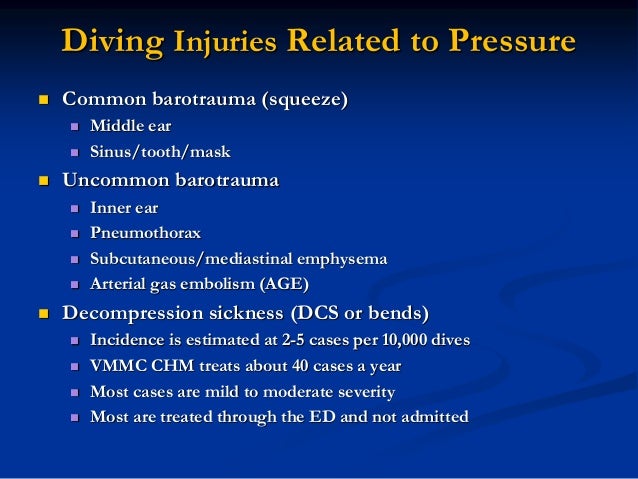
Decompression sickness bleeding. It occurs most commonly in scuba or deep-sea divers although it also can occur during high-altitude or unpressurized air travel. Decompression sickness DCS the bends involves gases diffusing into the tissues and getting trapped there. Time spent diving causes an excess of inert gas such as nitrogen to dissolve in the body.
Decompression sickness DCS is caused by the formation of bubbles of gas that occur with changes in pressure during scuba diving. Decompression Sickness DCS Arterial Gas Embolism AGE Decompression Sickness DCS. 4242011 Neurological Decompression Sickness When nitrogen bubbles affect the nervous system they can cause problems throughout the body.
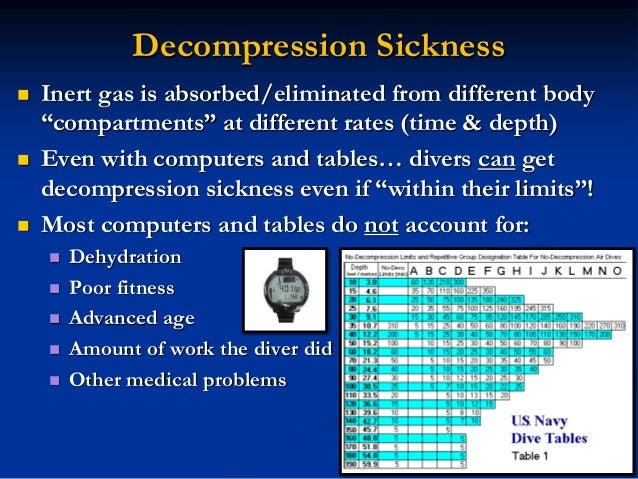
The diver now has gas bubbles in places where there should be none. N diving decompression sickness DCS occurs when a gas usually nitrogen accumulates in body tissues in a positive-pressure environment and after subsequent reduction of ambient pressure escapes into body fluids and forms bubbles 1. When a diver surfaces this dissolved gas may form bubbles which then cause local damage to body tissues or obstruct small blood vessels.
Expansion of intracranial air and middle ear. Nitrogen is the usual culprit. Symptoms can spread quickly and if left untreated can lead to paralysis or even death.
The possibility of significant epidural bleeding during direct decompression requires experience with techniques of epidural hemostasis. 352019 Although decompression sickness DCS a complex resulting from changed barometric pressure includes high-altituderelated and aerospace-related events this article focuses on decompression associated with the sudden decrease in pressures during underwater ascent usually occurring during free or assisted dives. Similarly experience with neural element repair is essential and dural tears that are encountered should be repaired if possible.
The results may suggest that TAFI plays only a marginal role if any in the regulation of induced fibrinolysis in divers which may contribute to bleeding episodes in a course of decompression sickness. Symptoms can include fatigue and pain in muscles and joints. During descent and while on the bottom the diver absorbs nitrogen into the tissues until they reach a pressure balance.
Which of the following tissues or organs is most likely to be affected. These cases have not been sufficiently investigated and thus bleeding complications could not be directly correlated to the enhanced fibrinolysis. Decompression sickness also called generalized barotrauma or the bends refers to injuries caused by a rapid decrease in the pressure that surrounds you of either air or water.
Haemorrhage into the spinal cord is implicated in the pathogenesis of these cases and evidence is presented that supports the view that the bleeding coincides with shrinkage of autochthonous bubbles. This type of decompression sickness normally shows as tingling numbness respiratory problems and unconsciousness. Patients can become agitatedanxious.
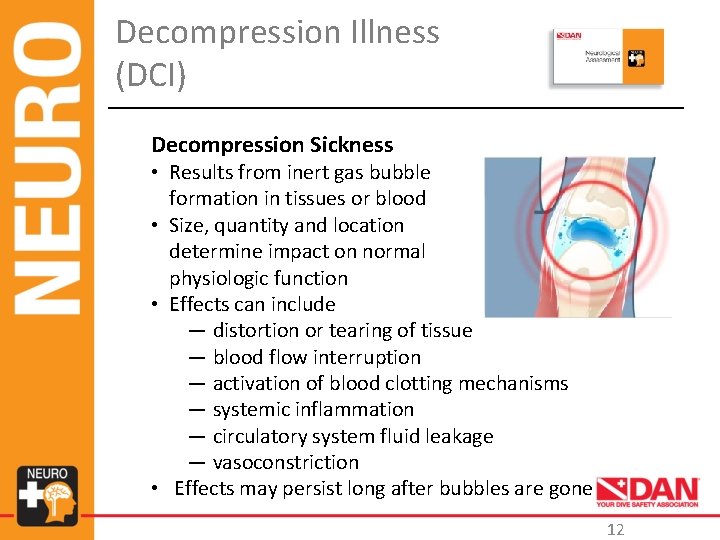
Decompression sickness is a disorder in which nitrogen dissolved in the blood and tissues by high pressure forms bubbles as pressure decreases. 1 DCI most frequently occurs in relation to compressed air or mixed gas diving but it may also arise in aviators after rapid ascent to altitude or cabin decompression and in astronauts participating in space walks. Risk of rapid depressurization.
This is particularly seen in cases where features of severe spinal cord injury develop soon after surfacing. Their purpose is to minimize the risk of incurring decompression sickness. 472019 bleeding or body fluid burns must be kept to a minimum otherwise damage to mechanics and electrics may mean craft out of action.
Nitrogen dissolved in the blood and tissues by high pressure causes the formation of bubbles as pressure decreases. Carboxypeptidase B2blood Carboxypeptidase B2physiology. DCS has been studied in great detail as diving techniques have progressed and underwater activities.
14517491 PubMed - indexed for MEDLINE MeSH Terms. Decompression illness DCI is the term given to the clinical manifestations of bubble formation in the blood or tissues after a reduction in ambient pressure. There are a number of reported cases of decompression sickness DCS with haemorrhages.
Decompression sickness is a diving-related disorder. It is also experienced in commercial divers who breathe heliox a special mixture of oxygen and helium and astronauts and aviators who experience rapid changes in pressure from sea level.
 Pdf Adjunctive Treatment Of Decompression Illness With A Non Steroidal Anti Inflammatory Drug Tenoxicam Reduces Compression Requirement
 Medical School Decompression Sickness What To Know Decompression Sickness Sick Medical School
 Decompression Illness
 Illustration Effect Of Bends Decompression Sickness 8251613
 Decompression Sickness Nursing
Decompression Illness
 Lecture 4 Trapped Gas And Decompression Sickness Ppt Video Online Download
 Diving First Aid For Professional Divers Ppt Download
 Lecture 4 Trapped Gas And Decompression Sickness Ppt Video Online Download
 Pdf Decompression Sickness In Women A Possible Relationship With The Menstrual Cycle
 Decompression Illness
 Emergency Oxygen For Scuba Diving Injuries Ppt Download
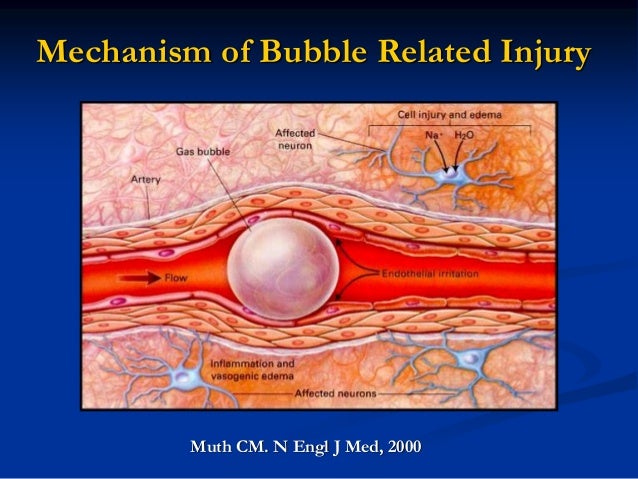 Decompression Illness
 Lecture 4 Trapped Gas And Decompression Sickness Ppt Video Online Download
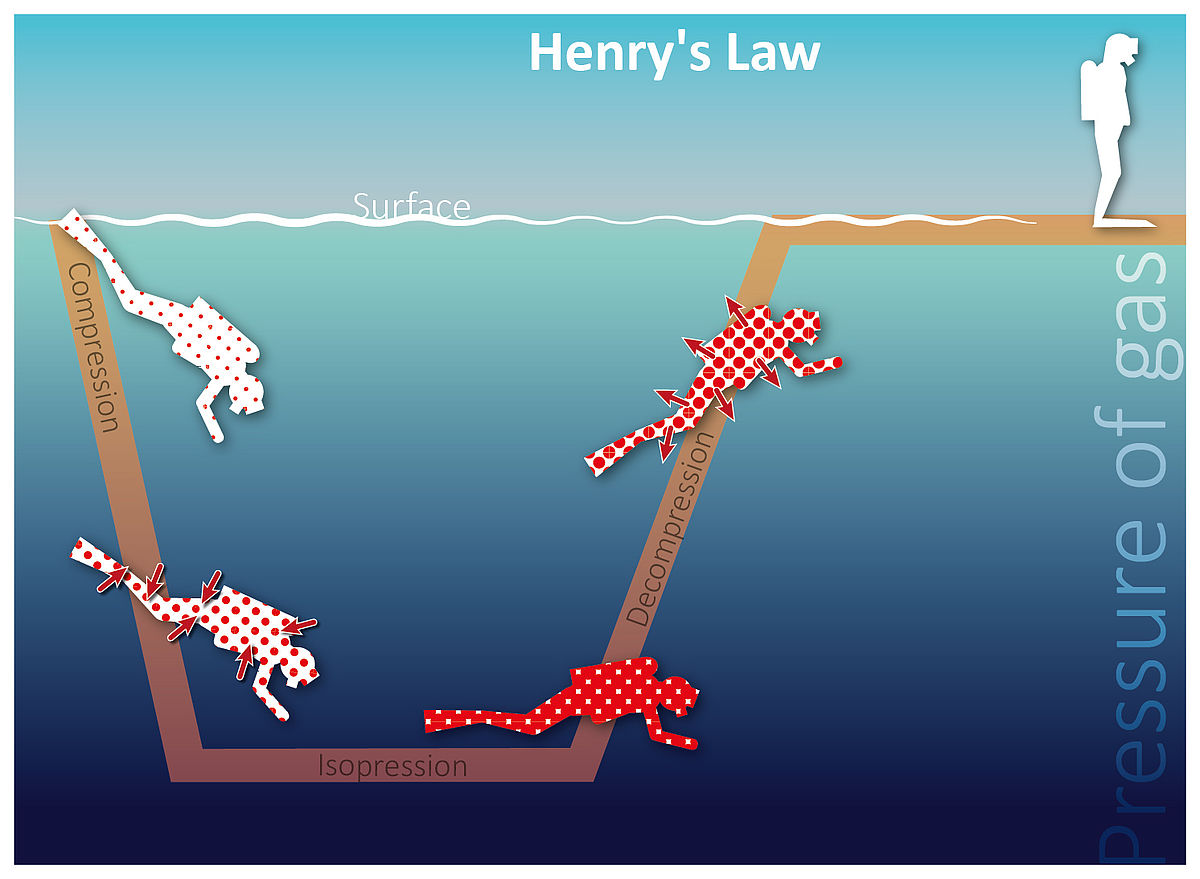 Decompression Sickness Medical Articles Service Medicine Aqua Med
 Decompression Illness
Decompression Illness
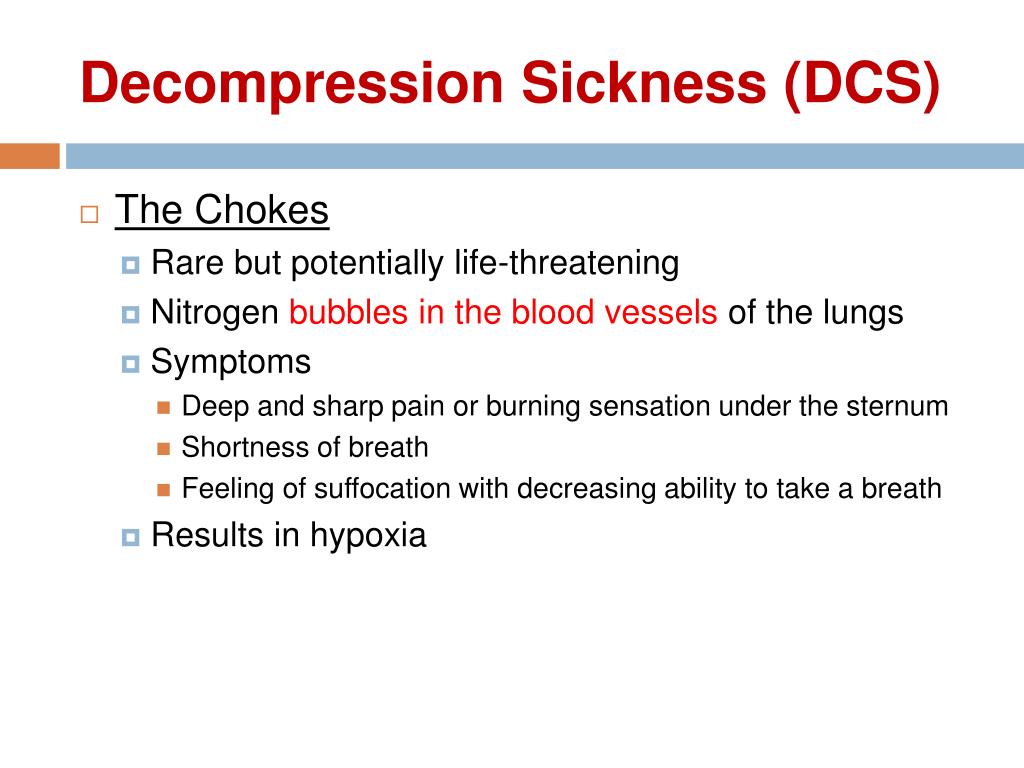 Ppt Lecture 4 Trapped Gas And Decompression Sickness Powerpoint Presentation Id 1029083
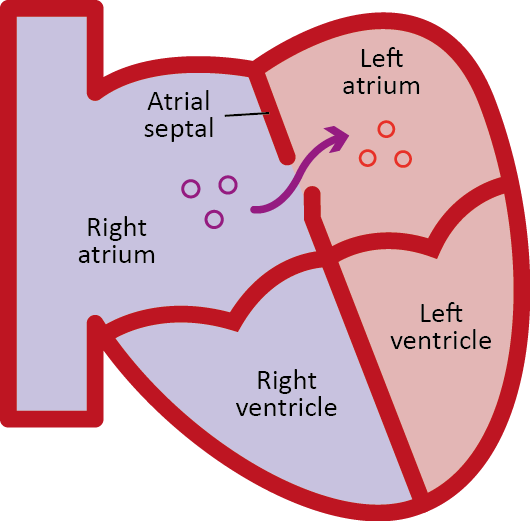 Decompression Sickness Medical Articles Service Medicine Aqua Med
 Neurological Assessment March 2018 V 2 1 Getting
Post a Comment for "Decompression Sickness Bleeding"